3 March 1945 Rhineland 27 March 1945
Through
the Eiffel, the 90th smashed on to reach, on the 5th the Kyll River over which
all bridges had been destroyed. Company A, under fire from a not too secure
bridgehead, constructed a floating support bridge at Birresborn then built a
plank road across the flood plain on the far shore. On the night of 6‑7
March, Company B constructed a bailey across the Kyll at Lissingen.
While
in the Brandschied – Habscheid – Winterspelt area experiments had been
conducted in the production of artificial moonlight with anti‑aircraft
searchlights. Here on the Kyll the experiment paid off. Three of the giant arc
lights placed several miles away were trained on the low hanging clouds then
adjusted by radio and telephone so that the optimum amount of light was
reflected from the clouds over the bridge site.
The
laden bridge trucks were difficult to move through the mud and heavy traffic
and it was almost midnight before they arrived. Company B was already in
Lissingen and the men had hit their "sacks". But as soon as the first
load of panels arrived the company was up and on the job. The artificial
moonlight gave just enough illumination to make work with the bridge parts possible
yet not enough to permit observation by the enemy who was only a few hundred
yards away. At first work was slow then as the "moonlight" was better
adjusted and the men became accustomed to the semidarkness the bridge rapidly
took shape. It was finished by dawn – well before the deadline for an armored
division to pass through. The last real defense line west of the Rhine was
broken.
The
90th was rolling again as it had across Northern France. On the 9th the 315th
cleared abandoned vehicles and equipment from 40 miles of roadway as the 90th
roared into Mayen astride the principal route to Koblenz on the Rhine. On to
the Rhine was the watchword, but the famed 90th, the masters of river
crossings, were diverted to the southeast to again assault the Moselle.
After
three days of reconnaissance and planning the boat crossing was made at 0230 on
14 March 1945 in the vicinity of
Hatzenport, Brodenback and Burgen. Supporting corps engineers were to do the
major bridging and ferrying on the site of the civilian ferry at Hatzenport.
Initially the resistance was light but as the troops scaled the almost vertical
vineyard‑covered valley wall the enemy stiffened. After daybreak, as the
infantry pushed out on to the plateau, the resistance became fanatical and the
krauts threw in everything in a final effort to save the forces west of the
Rhine.
Support
rafts were operated to carry over light tactical vehicles and later a heavy
ferry took armor across to support the hard pressed infantry. That evening a
treadway bridge was completed by the 150th engineers and on the next day the
4th Armored Division roared across to spearhead the push to the Rhine at
Boppard. When compared with the November crossing at Cattenom this second
assault of the Moselle had been a cinch.
A
large portion of the 315th was bivouacked in Hatzenport for three days during
the bridging operations. Hatzenport was a beautiful little town nestled at the
brink of the Moselle between the steep sides of the valley. These sharply
terraced slopes were literally solid
masses of vineyards. The entire population of Hatzenport was engaged in the
wine industry. There were huge underground warehouses filled with thousands of
bottles of the finest vintages of Moselle wines and champagnes. Naturally there
was much sampling and comparing of these products and when the battalion loaded
up on the 16th to move to Mermuth at least one platoon commander found that it
was necessary to dump some of the samples in Order to get his ammunition and
tools aboard.
It
had been presumed that the 90th would force an immediate crossing of the Rhine
but suddenly the direction was changed. The division stampeded 30 miles to the
southeast and crossed the Nahe River between bad Kreuznach and Bingen on 19
March. Scattered mines, knocked out or abandoned vehicles littered the roads
leading into the city of Mainz. The engineers were fighting to clear the routes
of their respective combat teams and task forces.
The
assault on the stronghold of Mainz began 22 March and with each of the six
attacking infantry battalions and engineer team moved forward to clear mines
and debris from the streets. Bitter house‑to‑house fighting was
expected but the capture developed into a “snap". The disillusioned
civilians were eager to hoist a white flag, to help clear the streets of debris
and to help locate mines. All went well until, in the 359th sector, a booby
trapped mine killed one and seriously injured two other engineers of Company C.
While
the 90th was clearing the remaining resistance from Mainz, the 5th Division
crossed the Rhine between Oppenheim and Nierstein. The 90th had missed
assaulting the greatest of the European rivers but quickly, on the heels of the
5th Division crossed on the 22, 23 and 24th to expand the bridgehead, capture
Darmstadt and drive 19 miles to the outskirts of Frankfurt.
On
27 March the battalion CP was set up in Bierber just outside of Offenbach. Here
plans were rapidly made for still another assault crossing. This time the Main
River at Muhlheim between Frankfurt and Hanau. A thrust would be made into
central Europe.
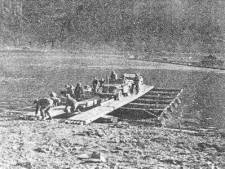
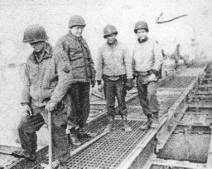
Figure 8-1 Figure 8-2
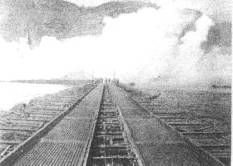
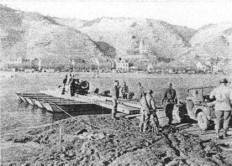
Figure 8-3 Figure 8-4
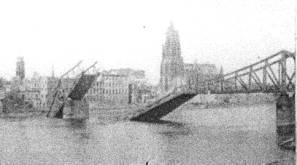
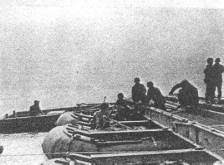
Figure 8-5 Figure 8-6
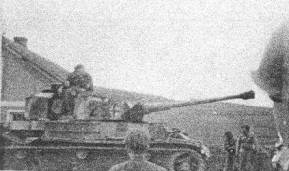
Figure 8-7