6 January 1945 Ardennes 2 March 1945
The ground had frozen solidly. Five inches of
snow had fallen. A glazing of ice had formed on the highways as the 315th
loaded up to head north through a raging storm. All vehicular identifications
were painted over and shoulder patches were removed. TO insignias on helmets
were covered with tape and the 90th moved 50 miles, anonymously, through the
storm.
Backtracking
across the Moselle the troops again crossed at Cattenom. The scene was
different this time for the snow and ice had covered the wreckage and cars of
that November assault. The treadway bridge, protected by several anti‑craft
batteries, lay peacefully across the, now tame, Moselle.
Swinging
to the north the battalion rolled through the muffled silence of the snowstorm.
Into Luxembourg at Eurange, on through Luxembourg city then west through Arlon,
Belgium, then north again the troops rolled in the near‑zero weather.
On
9 January the 90th was in place, ready to assault the enemy east of Bastogne,
and again it found the weather definitely pro‑nazi. On the icy grades,
trucks skidded and plunged into ditches. Tanks spun their tracks helplessly and
high winds, sweeping down the valleys and across the ridges, drifted the snow
into cuts along the roads.
Bulldozers
were used for snow plows and captured German V plows were mounted on the
bumpers of 4 ton trucks. [Figure 7-1] The engineers worked day and night
spreading gravel on the ice covered grades and curves and plowing off the
drifts in a mighty effort to keep the roads open. Near Herlange, hundreds of
spruce and fir saplings were cut and piled to form snow fences at strategic
points along the MSR.
As
the infantry pushed on, snow covered mines became an ever increasing problem.
Some were American mines emplaced by troops which had been overrun by the
sudden thrust. Others had been hastily thrown in by both Americans and Germans
during the see‑saw battles which had ensued – now they were all well buried
under the snow and ice of winter in the Ardennes. In the sub-zero blizzard the
engineers searched and probed for mines as the 90th hurled the kraut back into
"der Vaterland" and into the Siegfried Line.
For
the first time the 315th was clearing, from the roads, large numbers of blasted
and burned American tanks and vehicles. In the heart of the "bulge"
the Sherman tanks and the tigers had slugged it out. Many jeeps and weapon
carriers had been overrun and burned and everywhere there was a mixture of abandoned
equipment – both American and German.
From
a local factory the battalion procured a hundred pair of skis and set up a sled
manufacturing business. Platforms were built and runners attached to form
carriages for the infantry to use in hauling ammunition, rations and the
wounded over the snow and ice covered hills.
Back
into Luxembourg on 20 January, Company C and Company A built baileys over the
Trione near Asselborn and Sassel. On the 25th the C.O. of Company B was
seriously wounded when his jeep struck a snow covered box mine on a narrow
trail between Sassel and Tois Verges near the Tois Verges Monastery.
The
infantry was rapidly pushing forward in this area of wandering international
boundaries where one had to carefully watch his map to tell whether he was in
Luxembourg, Belgium or Germany.
On
31 January the 315th staged the assault crossing of the Our river between Burg
Reuland and Steffeshausen – for the third time, a flooded stream plagued the
engineers. [Figure 7-2] An early thaw was developing. Above freezing weather
was now melting the ice and snow and the Our leaped out over its flood plain.
Baileys were built at Burg Reuland and a Peterskirche and no sooner than they
were completed – the floodwaters lashed at the footings. Rubb!e was hau!ed,
sand bags were filled and the Burg Reuland bridge was saved. But the
Peterskirche bailey was toppled into the torrent.
The
90th was across, however, and smashing its way again into the Siegfried Line –
this time in the vicinity of Heckhuscheid, Habscheid, Brankscheid and
Grosskampenberg. [Figure 7-3, Figure 7-4] Division headquarters moved to
Winterspelt and the battalion CP was established at Elcherath on 9 February.
Mines,
which had been frozen into insensitivity now thawed. On roads, which had been
carrying heavy traffic, trucks were being blown up by the thawing mines and in
the rear areas the corps engineers worked feverishly to remove these bypassed
weapons.
The
3l5th Engineers joined the infantry teams in blasting the forts with satchel
charges as the 90th steadily drove through the fortifications. But again the
supply situation caused a temporary halt, the mission became a containing one,
yet violent artillery and mortar duels were a daily occurrence. Cutting timber
from the "orchard type" pine forest the 3l5th assisted the infantry
in improving their positions by constructing log covered shelters and OP's.
During
the entire month of February the 315th fought the mud battle. Supporting corps
engineers worked hundreds of civilians and finally the MSR situation became so
bad that rails and ties were removed from the ballast and the railroad grade
was converted into a one‑way road between Burg Reuland and Hemmeres.
On
24 February the 90th was relieved and pulled out for a brief rest and
rehabilitation. The 315th H & S Company motor section had been working, at
Elcherath, on a portable shower unit. A
captured gravel‑spreading trailer was converted into a firebox. Boiler
tubing was cut and welded to form the heating coils. An atomizer was fabricated
to blow diesel fuel into the chamber and captured fire pumps were used to force
water through the heater. After several trial runs and modifications the unit
was set up on the Wintermpelter branch near Heckhalenfeld just south of
Winterspelt. Three hospital ward tents and stoves were borrowed and through
these shower and dressing tents poured a steady stream of battle weary troops.
The QM provided clean clothes for all and soon the entire division had been
refitted for the next battle, which was sure to come.
Preparations
for a final thrust through the Siegfried were made for the 90th knew that the
assault could not be much longer delayed. On 2 March it struck – smashing
through the remaining forts, dragons teeth and pillboxes and during the night 2‑3
March Company B bridged the Prum at Pronsfeld with a bailey. The west wall was
cracked wide open and in the process the division had captured and destroyed
over 500 pillboxes and log bunkers, had captured 3,195 prisoners and had
knocked out 38 tanks and SP guns.
The
315th filled many of the larger forts with tons of captured explosives and
ammunition. Then it detonated the charges, which in a mighty blast, destroyed
the fruits of years of German planning and the work of thousands of slave
laborers who had died in the construction of the impregnable Siegfried. But the
major tasks of fort destruction and mine removal were left to the corps and
army engineers as the 315th plunged on with the 90th on into the Rhineland.
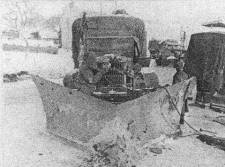
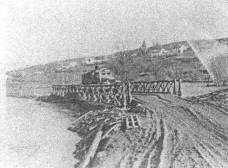
Figure 7-1 Figure 7-2
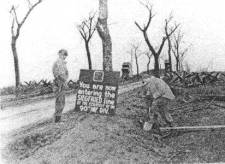
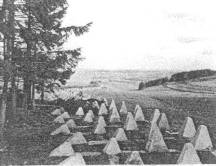
Figure 7-3 Figure 7-4
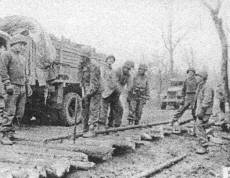
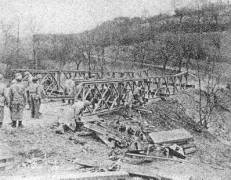
Figure 7-5 Figure 7-6
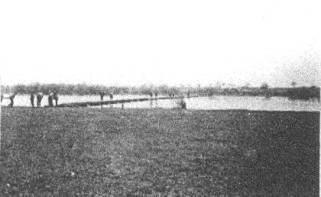
Figure 7-7