28 July 1944 Northern France 5 January 1945
First
there were great numbers of craters, burned out tanks, mines and demolished
cu1verts and during 27‑ 28 July the battalion suffered seven casualties ‑
mostly from mustard pot mines. But as the way was cleared through Periers, St
Sauveur Lendelin and Countances the going became easier until the Selune River
was reached at St Hilaire du Harcouet. Here on the night of 3‑4 August
Company C built the battalion’s first major bridge of the war.
The
road was fine, a paved highway along which the division was to roll, but over
the Selune River there was a 110 ft masonry arch bridge which had been
demolished. Two‑way traffic was required. With Company B assisting in the
repair of the approaches, Company C began the simultaneous construction and
launching of two double single bailey bridges. The structures were unusual in
that cutaway abutment seats were made so that the decking was level with the
roadway. Work was continuous throughout the night except for a period of 45
minutes when the area was attacked by the Luftwaffe. At 0130 the first
parachute flares were dropped and as they floated downward their burning
magnesium charges lit up the entire area like daylight. Anti‑aircraft
guns fired wildly first at the flares and then at the sound of the planes. But
around and around the planes droned and then at 0215 made the bomb run and
dropped their pay loads. With the long swoosh and the unmistakable earth
shaking blast the bombs hit. Had they been on their mark the results would have
been devastating but the anti‑aircraft fire and perhaps other factors
caused the bombers to miss their target. The sticks fell harmlessly in the
nearby fields and the only casualty was one man hit by an ack‑ack shell
fragment. Work was quickly resumed and the bridges were completed well before
the deadline.
The
90th rolled on! The citizens of St Hilaire stood in the streets and cheered and
waved and yelled. Troop laden trucks and jeeps were pelted with bouquets of
flowers and the men were presented, ceremoniously, with wine and cider and
Calvados. On and on the 90th rolled. On through Landivy, Louvigne du Desert and
Ernee – it was the same in every town and village. Here was Monsieur le Mayor
in his cutaway stripped pants – waving frantically for quiet so he could make
his speech. At times the welcoming committees seemed unhappy because the troops
wouldn't stop long enough to receive the keys to the city formally.
To
Task Force Weaver, Company A was attached on 5 August. This now famous team
made a 37 mile dash to Mayenne where engineers of the 1st squad of the 2nd
platoon of Company A removed the German explosives from a key bridge over the
Mayenne River. Under direct fire these soldiers dashed over on the bridge,
clipped the firing wires and defused the huge aerial bomb charges with which
the krauts were trying to destroy the massive stone bridge. Later in a flanking
movement Company A ferried the 2nd and 3rd battalions of the 357th across the
river and the entire city fell.
Again
the division was rolling along – out of the hedgerows, out of the stench of the
war torn bocage country and across the plains of Northern France. Rolling so
fast that the water points leap‑frogged each other – sometimes twice a
day three or four small scale map sheets were crossed without stopping.
Each
company moved with its CT regiment clearing vehicles and mines, repairing a few
craters but mostly rolling along at top speed across France – chasing the
kraut.
At
Le Mans a bridge over the Sarthe was captured intact on the 10th. The battalion
was already constructing a floating bridge just north of the city and both were
used to speed the division in a drive northward.
Le
Mans was the first large city to be liberated by the 90th and the French
welcome surpassed all previous ones. Flowers, eggs, cognac, cider, tomatoes,
wine and bread were offered and frequently tossed to (and sometimes tossed at)
the troops by the hilarious frenchmen. Here the mademoiselles were even better
than before, simply because there were more mademoiselles. There were the
bearded frenchmen who insisted on bestowing wet whiskery kisses on the cheeks
of each and every American who came within his range. But the mademoiselles
were shy and coy yet not too shy and not too coy.
But
Le Mans was soon left behind. The battalion with the division had rolled 140
miles since breaking out of the hedgerows, much by‑passing of German
columns had occurred and many head on collisions had resulted in sharp, road
junction battles where the perfectly coordinated troops battered down the
heavily armored German forces. Now the 90th was surging northward in a move to
seal off the retreating Boche armies.
The
lettered companies were moving with their respective CT's and the units swiftly
liberated Alencon and Sees. Then moved on to Nonantpin and into an area to
become famous as the Falaise Pocket.
German
columns were desperately trying to escape. The engineers built and manned road
blocks and especially at a road junction just east of Le Bourg St Leonard the
2nd platoon of Company C engaged in very heavy fighting on the 17th and 18th
against repeated attacks by panzer columns. The frenzied attempts to break out
were stopped on the 19th, Company C, with the 359th Infantry, moved into
Chambois to make contact with the Poles and British of the north. In the other
regimental sectors Companies A and B were engaged in the same type of operation
and the trap was sealed.
Never
before had such a mass of destruction been seen. The artillery had a
"field day" as thousands and thousands of rounds were poured into the
trapped armies. Desperately the Germans beat themselves against the sides of
the wall that engulfed them but the 90th Infantry Division held fast. Prisoners
poured into the cages. Guns, equipment and vehicles beyond number littered the
valley floor.
It
was with enthusiasm that the engineers moved in to clear paths through the
wreckage. By 1800 on the 19th Company C, with assistance from the tankers and
TD's, had cleared from the streets of Chambois: 26 burned out tanks (including
5 mark VI's), 203 vehicles and 63 dead horses.
For
several days the clearing of roads continued but primarily it was a sort of
ghoulish picnic for the men who spent much time scrounging among the vehicles
for trinkets and for the prized P‑38's and lugers. But the mission was
accomplished and it was time to move on. The engineers had played another
important role in the division's operations. In this one, in four days, the
90th had captured 13,000 prisoners. Killed another 8,000 of the enemy and had
destroyed more than 300 enemy tanks, 250 self‑propelled guns, 164
artillery pieces, 3270 vehicles and countless other items of enemy war
material.
All
American dead and most of the German bodies had been collected but by the 26th
of August, a week after the trap had been sealed, the stench of a thousand dead
horses and the general carnage of the battlefield in the warm summer heat was
terrific.
Morale
was high as the victorious 90th again loaded up and rolled to the east. On and
on ‑- through Mortagne, Chartres, Etamps, Milly and Fontainebleau – more than 160 miles in one day. Tactical
maps were out of the question and road maps (carte michelin) were generally
used. Corps maps were so far behind that essential prints were flown up and
dropped for distribution.
After
an overnight bivouac in the great forest of Fontainebleau, where kings of
France had hunted and played at their summer palaces, the battalion pushed on.
Crossing the Siene at Montereau on 27 August the 315th less the CT platoon
attachments assembled at Nangis then pushed on toward Montmirail and to Dormans
on the Marne.
The
French resistance forces were saving many bridges from destruction by the
rapidly retreating German forces. However, in this area most large bridges were
temporary structures and they were easy to destroy. In fact in many places the
bridges had been destroyed by the retreating French in 1916‑17 then
rebuilt again. At the beginning of World War II they had been destroyed again
by the French, rebuilt by the Germans and now they were destroyed by the
Germans to be reconstructed by the American engineers. Everywhere Free French
were eager to help. They had spotted mines and assisted in their location and
removal. They helped procure bridge repair materials and helped in
reconstruction work. But near Dormans the gap in the span across the Marne was
too great for expedient repairs. Company A built the battalion' s assault boat
and rubber float bridge and the division rolled on to the cathedral city of
Reims in the Champagne District in the
heart of France.
Reims,
which had been devastated during World War I, fared this one much better. The
airdrome had been heavily bombed and some of the bridges in the center of the
city had been destroyed. But the wide boulevards, the sidewalk cafes, the
supplies of champagne and the famous cathedral were unscathed. In spite of the
light enemy resistance the dash across France suddenly came to a halt. The
famed Third Army had run out of gasoline. It was on 31 August 1944 that the
battalion halted near Bourgoyne on the outskirts of Reims. They had stretched
the supply lines beyond their elastic limit.
Company
A engaged in bridge repair work in the city and elements of Company A and
Company B repaired bridges along the Aisne River near Pontavert on the
division's left flank. The main task, however, fell to Company Cc.
Before
the 90th could roll again gasoline had to be supplied. So, Company C moved to
the Reims airdrome and turned themselves into aviation engineers for a week.
Runways were cleared of mines and repaired and soon C‑ 47's were roaring
in with loads of petrol flown directly from bases in England. The stock of that
rare and precious commodity was built up to such an extent that on 7 September
the division and the battalion rolled again.
The
route was to the east – on through the still pock marked World War I
battlefields near Ste Menehould and at Verdun. But again the supply lines
snapped as the division halted at Etain then slowly pushed on to the outskirts
of the fortress city of Metz and to the Moselle.
At
Briey, a huge cold storage warehouse filled with choice beef for the Wermacht
was liberated. For the first time since in the hedgerows, where the fine Norman
cattle had stepped on tellermines, the battalion had choice t‑bone and
sirloins.
Immediately
plans were made for an assault crossing in the vicinity of Thionville but a
continuing bad supply situation forced a long deferment of this operation.
By
14 September the mission had definitely become a defensive one. The heavily
armed ancient fortresses of Metz were strongly manned. Two platoons of Company
C and one platoon of Company A were attached to task force Randolph. The
mission was to hold the center of an enemy salient in the Foret de Jaumont and
during the ensuing action the battalion suffered eleven casualties from mortar
and artillery fire. The engineer mortar platoon was again brought into action
and, from a quarry near Malancourt la Montagne, round for round was traded with
the kraut.
The
major portion of the battalion moved into the Bois de Fleury near Beaumont on
15 September and the next day the rains came. For twelve days without stop the
downpour continued. An early fall had come to the Moselle and with it had come
a stalemate.
Strong
patrols probed the fortress outposts. In slugging matches, while in support of
the 359th, Company C suffered 10 casualties at Gravelotte on the 26‑27
September. On 3 October a jeep and trailer load of mines exploded near Pierrevillers
killing seven men of Company A.
Continuing rains and the heavy traffic turned
roads and trails into ribbons of mud and turned the battalion bivouac, in Bois
de Fleury, into a wooded bog. For almost two months the engineer battle was
conducted from this – "Fort Quagmire".
Road
work was of first importance but other projects quickly developed. A mock up of
a portion of Fort Jeanne d'Arc was constructed for practice assault work. Then
a tank transported moat bridge was fabricated. Experiments with the conger, the
snake and large shaped charges were conducted in a captured Maginot Line
section west of Thionville.
As
the cool rains of autumn gave way to the cold rain and wind of winter the
battalion dismantled a large number of prefabricated hutments in the Maginot
area. After hauling them into the regimental zones they were erected behind the
front lines near Doncourt and St Marcel for use by the infantry and in
"Fort Quagmire", the prefabs rapidly replaced the rain soaked pup tents.
Camouflage
of the huts built for the infantry was a difficult problem. In "Fort
Quagmire” the falling leaves left bare the rooftops and the vehicle parks. The
garnished nets had been the old standby against aerial observation but here the
problem was much greater. Again materials from the Maginot Line were employed.
Various types of wire netting with clay and metal garnishings were effectively
used. Furnishings such as beds, tales and chairs and even items from Hitler's
own suite in the vast underground Maginot city were brought up and moved to
complete the barracks of "Quagmire".
One
particular, much traveled, section of a road south of Gravelotte was subject to
clear observation by the Germans in one of the casemates of the Metz fortress
system. The krauts seemed to have enough ammunition to shoot at any vehicle
which ventured down the racetrack during daylight but not enough to shoot
indiscriminately without a clear target. So, to deny this perfect observation
Company B turned itself into a forestry company and cut hundreds of evergreens
from the Bois de Ognons. Then, under the cover of darkness, the engineers
replanted the trees, with guy wire supports, forming a screen all along the
road. It would be good to have known the surprise of those German gunners when
they looked across their field of fire the next morning and saw a new forest
that had "grown" overnight.
Except
for a violent 27 day battle for Maizieres-les‑Metz the division zone was
a stalemate of mud punctuated by the exchange of fire by combat patrols and the
occasional duel of artillery and mortars. But on 1 November a relief of the
90th began. By the 3rd all units of the battalion had moved again to the
vicinity of Fontoy and Angevillers just west of Thionville. The assault of the
Moselle, which had been first planned in September, was on. Metz would be
encircled and the 90th would drive across the German frontier into Naziland.
Days
were filled with planning, preparation and rehabilitation. Nights were filled
with movement of troops and equipment being juggled into position for the
assault. Two battalions and other units of the 1l32nd Engineer Group would
support the operation. The 315th would ferry a portion of the assault troops,
furnish engineer support on the far shore and construct a foot bridge and a
light raft. The corps engineers would ferry the other assault troops and build
the heavy bridges and rafts.
The
Moselle was 350 feet wide at the selected crossing sites of Cattenom and
Malling. Normally the bridging of such a stream would not have presented any
insuperable problems, but as D-Day approached the steady downpour of rain
continued. Assembly areas were turned into impossible bogs of mud where supply
trucks sank to their axles. Foxholes were turned into deep pools of icy water
and as the hour approached ‑ still the rain poured down.
0330
on 9 November was H-Hour. The 359th Infantry crossed on the left at Malling and
the 358th crossed at Cattenom – across the wild Moselle – angrily foaming,
swirling and eddying as it reached then passed, flood‑stage.
Surprise
over the enemy had been gained but violent reaction soon came from the German
artillery and mortars, already "zeroed in" on the crossing sites,
directed from the ancient Prussian Fort Koenigsmacher, and in spite of the
artificial fog created by generators and smoke pots the fire was murderously
accurate. A single salvo hit and severely damaged five truck loads of bridging.
Still,
the rain poured down and the Moselle swiftly spread to 400, then 600 and then
800 yards ‑ out across the flood plain ‑ eight times the normal
span. Pontoons were ripped from their moorings and were washed downstream.
Boats carrying supplies were capsized and only those with large motors could
stem the tide.
A
bridge at Malling (although the approaches were under 4 ft of water) was under
construction on the 11th but a well placed mortar burst deflated several
floats. The bridge capsized and was swept downstream in the swirling current.
Amphibious trucks were brought in but only a few were able to battle the raging
torrent and these were mired up in the mud banks or disabled by submerged
antitank mines on the far shore.
Power
boats and liaison planes were the only means of transportation as the troops
savagely fought on and captured fortress Koenigsmacher and repulsed
counterattack after counterattack.
On
the night of 11‑12 November two tank destroyers crossed the reconstructed
bridge at Malling but the raging torrent, in one mighty blast, swept the bridge
away and scattered its remnants 800 yards downstream.
Then
the river passed its crest and began to subside – first at a rate of ¾ of an
inch per hour, then as rapidly as it had risen, it receded. On the fifth day
the moselle was bridged. At Cattenom the tanks and artillery rolled in a steady
stream – uninterrupted only when the receding water allowed some of the floats
to come to rest on previously submerged mines. Mines had been numerous in the
hedgerows of Normandy but never had the 315th encountered such deliberate
minefields and antitank defenses as the enemy had prepared here east of the
Moselle. Along a 12 mile band parallel to the river hundreds of thousands of
mines had been installed – mines of all types. There were Schuh mines designed
to amputate a foot and there were wooden box Mines to blow off a jeep wheel.
There were Hungarian mines, Italian mines and there were glass mines and
asphalt mines, which the detectors could not detect. Of course there were huge
numbers of the now very familiar tellermines and "S" mines.
But
in spite of the "hell and high water" the old 90th slugged on and
with the 5th Division closed the pincers around Metz, and on 19 November the
fortress city fell. Of the operation, General Patton, Third Army Commander
wrote to General Van Fleet, Division Commander:
"The capture and
development of your bridgehead over the Moselle River in the vicinity of
Koenigsmacker will ever rank as one of the epic river crossings of history.
Please accept for yourself and pass on to the officers and men of your valorous
division my high commendation for the superior manner in which you and they
preformed this truly magnificent feat of arms."
There
was no halting to gloat over the fall of the fortress – Metz. For the sacred
soil of the "Vaterland" was now only a few kilometers ahead.
Using
great numbers of slave laborers the enemy had dug miles of huge antitank
ditches across the countryside in this frontier area between the Saar and the
Moselle. The ditches were opened across the roads and trails as well as the
highways. Then on the principal routes hasty timber bridges had been built over
the ditches to carry the retreating traffic. In the face of our advancing
infantry these structures were blown and the "Engineers War" ground
on as the 90th crossed the boundary into Germany.
The
international frontier was marked only by small monuments on some roads, but on
the highways the remains of blasted port of entry stations saluted the invading
Americans.
The
country didn't look much different. The civilians looked about the same although
the houses and the towns seemed cleaner and neater. But now, instead of the
troops pitching pup tents in the mud, the German civilians "gladly"
moved out of the best houses in town so the invaders could be sheltered.
Over
the Nied River at Niedaltdorf an almost unopposed "assault" river
crossing was staged. The infantry was ferried across, then the 315th built its
floating support bridge and a corps battalion moved up and constructed a double‑triple
bailey. Company B then pushed a bailey across the Nied at Kerprich Hemmersdorf.
The 90th pushed on and patrols reached the Saar on 19 November 1944.
After
the successful completion of the Moselle crossing the Saar looked like it could
be a cinch – a cinch if it weren't for the fact its opposite shore boasted one
of the thickest sections of the famed Siegfried line.
Enemy
observation of the few possible crossing sites was perfect and his prearranged
artillery fires were precisions of accuracy. Furthermore, as on the Moselle,
the Saar was approaching flood stage.
The
6th of December was the assault day and again, in the cold foggy pre‑dawn
hours, the 90th silently moved by assault boat and caught the enemy unaware.
Portions
of Companies A and B crossed with their respective regiments to fight and do
engineer work amid the Siegfried fortifications – Company C built a footbridge
near Wallerfangen, which stayed in just long enough to allow reinforcing troops
to cross – then a well placed round of heavy mortar fire neatly clipped the
bridge and the bridge and the wreckage went swirling down the stream.
Again,
the supporting corps engineers moved in to construct heavy rafts and a bridge
but, as at the Moselle, the flooded river, smoke dissipating winds and deadly
accurate fire blocked every effort. Bridges were started and rafts constructed
but the accurate fire knocked out each one. The infantry fought to capture then
recapture the pill‑boxes of Dilligen and Pachten and the 315th brought
over welding equipment to seal embrasures of the captured forts.
All
supplies were carried across in boats at night and the wounded were brought
back on return trips. At a site between the two on which the enemy had been
placing such accurate fire, a ferry was finally put in operation and a trickle
of armor and tactical vehicles began to cross. The trickle continued and on the
15th armor supported infantry stormed and took Dilligen.
Then
Suddenly the picture changed. To the north the Von Ronstadt offensive had
broken through the American lines in Belgium and Luxembourg.
Engineers
of the 315th began installing mines and booby traps in Dillingen as
preparations were made for the evacuation of the 90th’s Saar bridgehead. On the
19th Company A built a footbridge near Buren and the withdrawal began. For
three days and nights the operation continued and under continuous shelling all
troops and all except six destroyed vehicles were withdrawn by ferry,
foot-bridge; and assault boat and so the "double‑crossing" of
the Saar was completed. The Siegfried Line had been cracked and another triumph
was almost achieved but the fortunes of war demanded that the 90th move
elsewhere.
Christmas
of 1944 was spent in the Maginot Line area near Veckring. Here the 315th was
deliberately preparing a defensive zone along the front of the Siegfried switch
position from Sierck‑les Bains through Manderen, Launstroff and Waldwisse
to Mondorf. Bridges were prepared for demolition, craters were charged, trees
were fixed for easy felling across roads and mines were emplaced. But the 90th
could not long be spared for a defensive mission and on 5 January orders were
received – "be prepared for movement".
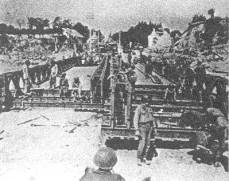
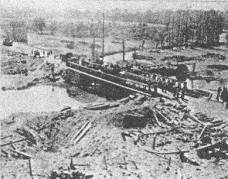
Figure 6-1 Figure 6-2
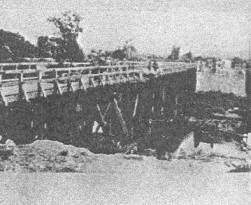
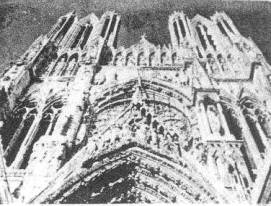
Figure 6-3 Figure 6-4
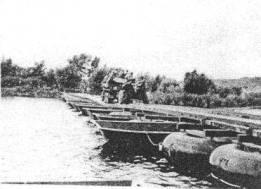
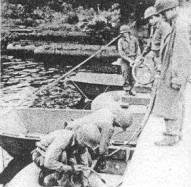
Figure 6-5 Figure 6-6
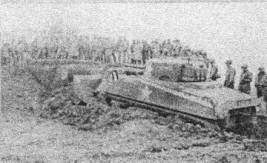
Figure 6-7 Figure 6-8
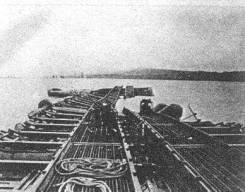
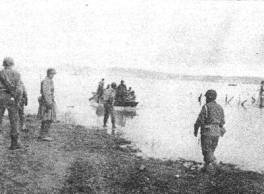
Figure 6-9 Figure
6-10
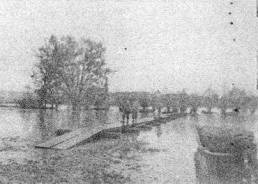
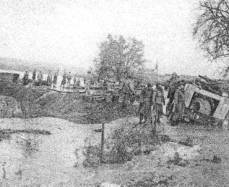
Figure 6-11 Figure 6-12
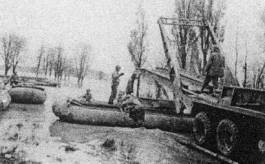
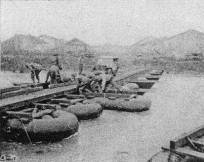
Figure 6-13 Figure 6-14
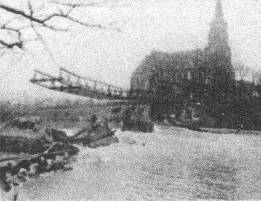
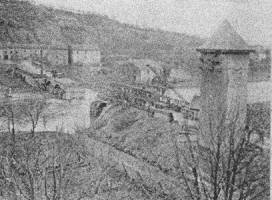
Figure 6-15 Figure 6-16
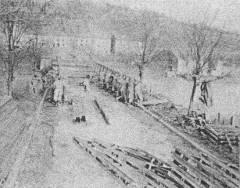
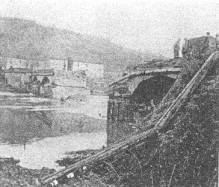
Figure 6-17 Figure 6-18
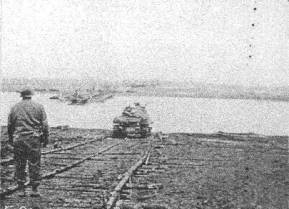
Figure 6-19